Quick answer
What is a good Jibhi itinerary for 3 days?
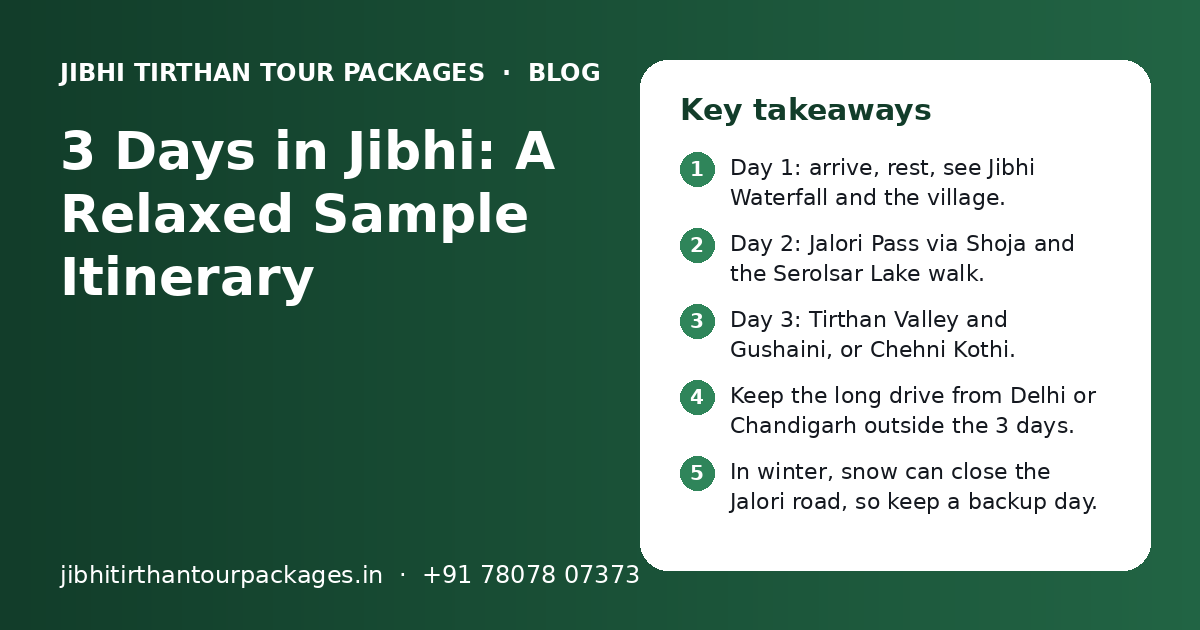
A good Jibhi itinerary for 3 days is simple. On day 1, rest and visit Jibhi Waterfall and the village. On day 2, drive up to Jalori Pass via Shoja and walk to Serolsar Lake. On day 3, spend the day in Tirthan Valley around Gushaini, or walk up to Chehni Kothi. Keep your travel days separate.
Key takeaways
- Day 1: arrive, rest, see Jibhi Waterfall and the village.
- Day 2: Jalori Pass via Shoja and the Serolsar Lake walk.
- Day 3: Tirthan Valley and Gushaini, or Chehni Kothi.
- Keep the long drive from Delhi or Chandigarh outside the 3 days.
- In winter, snow can close the Jalori road, so keep a backup day.
- Add a 4th day for Raghupur Fort, Banjar or a slow cafe day.
What does a 3-day Jibhi itinerary look like?
A 3-day Jibhi itinerary gives you one easy day in Jibhi, one high day at Jalori Pass and one river day in Tirthan Valley. This mix keeps the trip relaxed and covers the main sights.
Jibhi is a small village in the Banjar area of Kullu district in Himachal Pradesh. It is known for forests, wooden homestays and quiet streams. The best way to enjoy it is to do one main outing a day and rest the rest of the time.
| Day | Places | Pace | Tip |
|---|---|---|---|
| Day 1 | Jibhi Waterfall, village walk, stream-side cafes | Easy | Rest after the long drive. Keep walks short. |
| Day 2 | Shoja, Jalori Pass, Serolsar Lake | Moderate | Start early. Carry a jacket, water and snacks. |
| Day 3 | Tirthan Valley, Gushaini, river walk | Easy | Good day for kids and older parents. |
| Day 3 (option) | Chehni Kothi uphill walk | Moderate | Pick this if your group is fit and likes heritage. |
| Extra day | Raghupur Fort, Banjar or a slow cafe day | Easy to moderate | Useful as a backup if weather spoils day 2. |
This is only a sample. Weather, road conditions and your group decide what fits in a day. For a full list of spots, see our guide to things to do in Jibhi.
What should you do on day 1 in Jibhi?
On day 1, take it easy. Check in, rest, then visit Jibhi Waterfall and walk around the village in the afternoon.
Most people reach Jibhi in the morning after an overnight journey. You will likely be tired. So do not plan a big outing on this day.
- 1
Check in and rest
Have breakfast, take a bath and sleep for a few hours if you travelled overnight.
- 2
Visit Jibhi Waterfall
It is a short, easy walk through trees along a stream. Go after lunch when you feel fresh.
- 3
Walk in the village
See old wooden houses built in the local stone and wood style. Walk slowly and enjoy the quiet.
- 4
Cafe time by the stream
Sit in a small cafe with tea or coffee. Many cafes have forest or water views.
- 5
Early night
Have a warm dinner and sleep early. Day 2 starts early.
How do you plan day 2 for Jalori Pass and Serolsar Lake?
Day 2 is your big outing. Drive up to Jalori Pass via Shoja in the morning, walk to Serolsar Lake and come back to Jibhi by evening.
The drive from Jibhi to Jalori Pass is short but steep. In good weather it usually takes under an hour. Snow, rain and traffic can make it longer. Go with a driver who knows hill roads well.
Morning: Shoja and Jalori Pass
Shoja is a small village on the way up with lovely viewpoints. Stop for tea and photos. At Jalori Pass you get wide mountain views, a small temple and a few tea stalls. It is cold and windy at the top even in summer.
Midday: walk to Serolsar Lake
The Serolsar Lake trail starts at Jalori Pass. It is about 5 km one way, mostly through oak forest with gentle ups and downs. Most fit beginners can do it. Near the lake is a temple of Budhi Nagin. The lake is sacred to local people, so do not throw anything in it.
- Leave Jibhi early to get clear views and dry trails
- Carry a jacket, rain cover, water and light snacks
- Walk at an easy pace and take short breaks
- Start back by early afternoon so you reach the pass in daylight
- Carry all your waste back with you
Not keen on a long walk? Spend time at the pass, have tea at the top and come back down to rest at Shoja. You can also book our guided Jalori Pass and Serolsar Lake trek for this day.
What are the options for day 3: Tirthan Valley or Chehni Kothi?
On day 3, choose Tirthan Valley for an easy river day, or Chehni Kothi for a short but steep heritage walk. Families often pick Tirthan. Fit groups who like old buildings often pick Chehni Kothi.
Option A: Tirthan Valley and Gushaini
Tirthan Valley is a short drive from Jibhi via Banjar. The Tirthan river is clear and fast. Gushaini is a small village here and a base for many stays. You can sit by the river, take a village walk and visit a trout farm. If you eat fish, try trout at a local eatery.
Tirthan Valley is close to the Great Himalayan National Park, a UNESCO World Heritage Site. Deep treks inside the park need planning, a guide and entry rules that can change. Check the latest official update before you go. For a day trip, the river and villages are more than enough. See our guide to places to visit in Tirthan Valley.
Option B: Chehni Kothi
Chehni Kothi is a tall, old tower temple in Chehni village near Jibhi. It is built in the traditional wood and stone style. You reach it by an uphill walk through fields and village paths. It is not long, but some parts are steep.
Tirthan Valley day
- Easy and flat for most of the day
- Good for kids and older parents
- River views, trout farms and village walks
- Lots of places to sit and rest
Chehni Kothi day
- Steep uphill walk in parts
- Better for teens and fit adults
- Fewer shops on the way, so carry water
- Some temple areas may not be open to visitors
Need help with your project?
Talk to the Jibhi Tirthan Tour Packages team. Free first call, simple advice, clear quote.
How should couples, families and friends change this Jibhi plan?
Keep the same base plan, but change the pace. Couples can add more rest time, families should keep walks short, and friends can add more trekking.
Couples
Pick a wooden stay with a forest view. Keep day 1 and day 3 slow. Add a quiet cafe evening and stargazing on a clear night.
Families with kids
Choose Tirthan Valley on day 3. Skip the full Serolsar walk if kids are small, and enjoy Jalori Pass and Shoja instead.
Friends groups
Do the full Serolsar Lake walk. Add Chehni Kothi on day 3, or add a 4th day for Raghupur Fort.
Couples can see our Jibhi honeymoon package. Families can look at the Jibhi family tour package, which keeps the pace gentle.
What can you add if you have a 4th day?
With a 4th day, add Raghupur Fort, a slow day in Banjar and nearby villages, or simply a rest day. A spare day also protects your plan if rain or snow spoils day 2.
- Raghupur Fort: a walk from Jalori Pass to open meadows with wide views. Only ruins of the old fort remain.
- Banjar and nearby villages: see local life, small temples and the market area.
- Split stay: spend two nights in Jibhi and one or two nights in Tirthan Valley by the river.
- Rest day: read, sleep in and try local food like siddu, a steamed bread often served with ghee.
- Backup day: if the Jalori road is closed, move the Jalori day here when the road opens.
How does the season change your 3-day Jibhi itinerary?
The season changes day 2 the most. In winter, snow on Jalori Pass can close the road. In the monsoon, rain can cause slips and slow travel.
| Season | What to expect | How to adjust |
|---|---|---|
| Spring (March to May) | Pleasant days, cool nights | The plan works well as it is. |
| Summer (May to June) | Busy weekends, mild weather | Start early on day 2 to avoid crowds and afternoon clouds. |
| Monsoon (July to September) | Heavy rain, slips on hill roads | Keep plans flexible. Skip the Serolsar walk in heavy rain. |
| Autumn (October to November) | Clear skies, cooler days | A good time for views. Carry warm layers. |
| Winter (December to February) | Cold, snow at Jalori Pass, short days | The Jalori road may close after snowfall. Keep a backup day. |
In winter, the trails to Serolsar Lake and Raghupur Fort can be under snow. Go only with a local guide in snow. Always check the weather and the latest official road update before you go up. Read more in our best time to visit Jibhi guide.
How do you plan your arrival from Delhi or Chandigarh?
Travel overnight, so you reach Jibhi in the morning and do not lose a day. Keep the travel days outside your three days in Jibhi.
The usual road route goes via Mandi and Aut, then towards Banjar and Jibhi. From Delhi it is a long trip of about 10 to 13 hours by road. From Chandigarh it is about 7 to 9 hours. Roads, traffic and weather can change these times a lot.
| Starting from | Common way | Rough road time | Planning tip |
|---|---|---|---|
| Delhi | Overnight bus or private cab | About 10 to 13 hours | Leave in the evening and reach by morning. |
| Chandigarh | Cab or bus | About 7 to 9 hours | Leave early morning or late night. |
Many buses stop at Aut or Banjar, not in Jibhi itself. From there you take a local taxi. A private cab is easier for families as it drops you at your stay. For all routes, see how to reach Jibhi, or the Delhi to Jibhi tour package and Chandigarh to Jibhi trip pages.
What should you pack and keep in mind for 3 days in Jibhi?
Pack warm layers, good shoes, some cash and basic medicines. Mobile network can be weak and ATMs are few, so plan ahead.
- Warm jacket and layers, as nights are cool even in summer
- Shoes with good grip for walks and the Serolsar trail
- Rain jacket or poncho, mainly in the monsoon
- Some cash, as ATMs are limited and UPI may not work without network
- Basic medicines, including for motion sickness on hill roads
- A reusable water bottle to avoid plastic
Respect local culture. Dress modestly at temples, ask before taking photos of people and keep noise low in villages. Do not litter and stay on marked trails.
Want us to plan it for you? Jibhi Tirthan Tour Packages plans trips with stays, cabs, sightseeing, treks and custom itineraries. See our Jibhi tour package, or contact us. Call or WhatsApp +91 78078 07373 and share your dates for a clear quote.
Frequently Asked Questions
Is 3 days enough for Jibhi?
Yes, 3 days is enough for most people. You can see Jibhi Waterfall and the village, go to Jalori Pass and Serolsar Lake, and spend a day in Tirthan Valley or at Chehni Kothi. Keep your travel days separate from these three days so you are not rushing or too tired.
Can I do Jalori Pass and Serolsar Lake in one day from Jibhi?
Yes. Most people drive up to Jalori Pass in the morning, walk to Serolsar Lake and back, and return to Jibhi by evening. The walk is about 5 km one way. Start early, carry water and a jacket, and turn back if the weather gets bad or clouds come in.
Which is better on day 3, Tirthan Valley or Chehni Kothi?
Pick Tirthan Valley if you want an easy day by the river with kids or older parents. Pick Chehni Kothi if your group is fit and likes old temples and village walks, as the path is steep in parts. Fit groups with energy can try a bit of both.
Is this 3-day Jibhi plan good for winter?
It can work in winter, but the Jalori Pass road often closes after heavy snow. Keep a spare day, or swap day 2 for a Tirthan Valley day and cosy time at your stay. Carry heavy woollens and check the weather and the latest official road update before you go.
How many days do I need for a Jibhi trip from Delhi?
Plan about 5 days in total from Delhi. Take an overnight bus or cab on the first night, spend three full days in Jibhi and travel back on the last night. The road trip is long and times change with traffic and weather, so do not plan a tight schedule.
Is the 3-day Jibhi itinerary good for families with small kids?
Yes, with small changes. Keep day 1 short, enjoy Jalori Pass and Shoja without the full Serolsar walk, and choose Tirthan Valley on day 3. Pick a stay close to the road, carry snacks and warm clothes, and keep kids away from fast water and slippery rocks.
Should I stay in Jibhi or Tirthan Valley for 3 days?
Both work. Jibhi is closer to Jalori Pass and Chehni Kothi. Tirthan Valley is better for river views and easy walks. For three days, staying in Jibhi is simpler. With four days or more, you can split your stay and spend one or two nights near Gushaini.
Can you plan a custom 3-day Jibhi trip for my group?
Yes. Jibhi Tirthan Tour Packages plans trips with stays, cabs, sightseeing, treks and custom itineraries. Tell us your group size, dates and the pace you like. Call or WhatsApp +91 78078 07373 and share your dates for a clear quote and a simple day-by-day plan.